Pray For A Re-Enchantment Of Our Nation
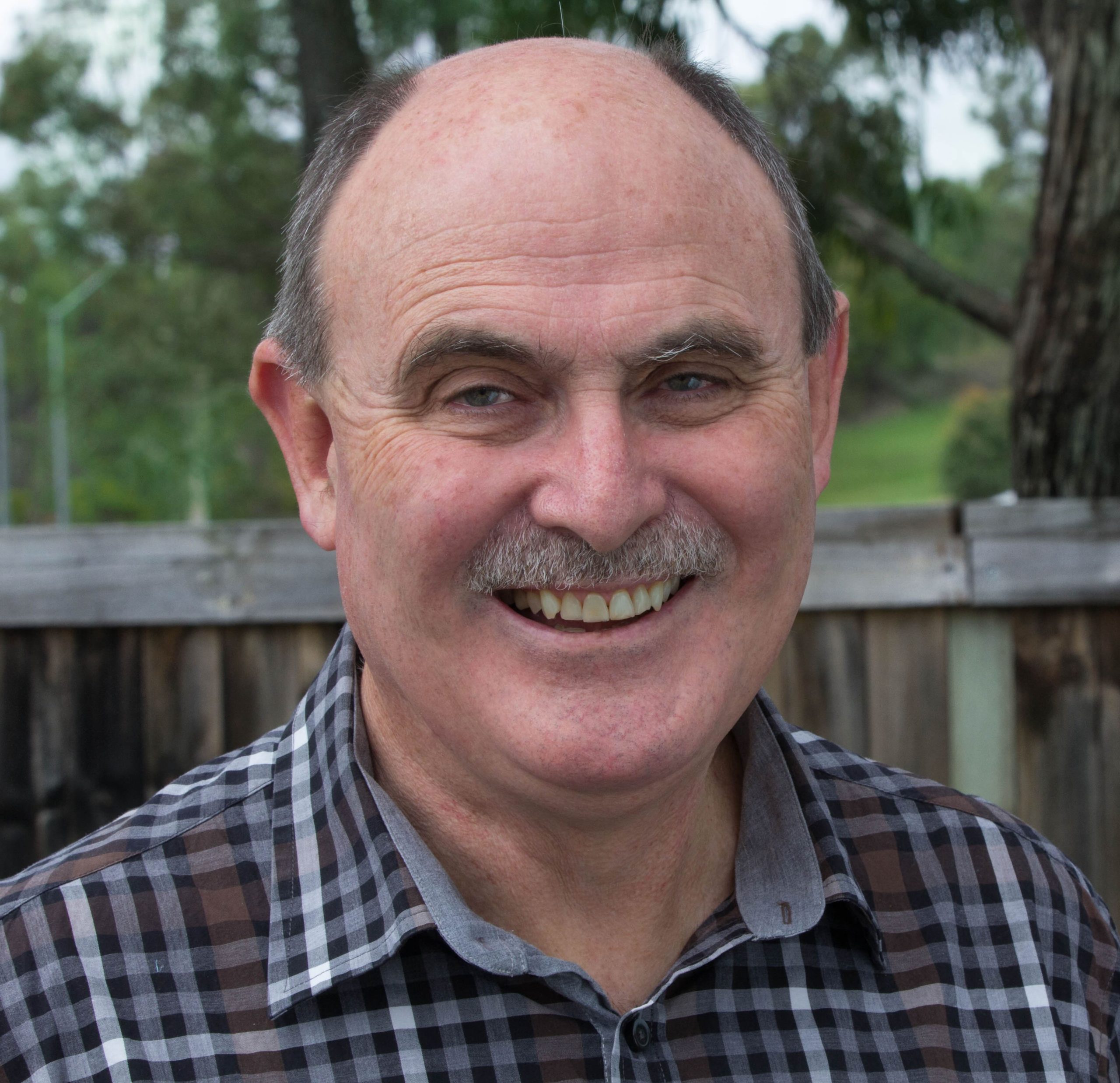
By Rod St Hill
Ever since my older daughter and her family moved to the United States, I’ve wanted to visit in the Fall. I’m writing now, in the cosy family room in her house with a view into the forest in Lake Steven’s, near Seattle. I can see a squirrel in a tree about 10 metres from the window. There are eagles nesting nearby and, occasionally, a deer appears in the undergrowth. My three-year-old granddaughter is playing happily but hops up on ‘Poppa’s’ lap for a reassuring cuddle every now and then. (Jeanette and I are babysitting today.)
‘Fall’ is a contraction of ‘the fall of the leaf.’ Likewise, ‘Spring’ is a contraction of ‘the spring of the leaf.’ There is certainly plenty of ‘fall of the leaf’ here at the moment. Interestingly, leaves don’t all flutter soundlessly to the ground. In the forest, a single leaf noticeably clatters as it strikes other leaves and branches on the way down. It’s quite uncanny. Occasionally, a leaf doesn’t make it to the ground for it drifts into a spider web and remains seemingly suspended in mid-air.
Of course, I expected to see the colours of Fall. I have and it is beautiful. I’ll choose the best as wallpapers for my phone, tablet, and laptop. What I didn’t count on was seeing so many pumpkins. Pumpkins are big business here as farmers and retailers cash in on Halloween. Pumpkins of all sizes are on sale with the largest selling for around US$35 and the smallest around US$5. Pumpkin spiced processed foods are available everywhere. Pumpkin doughnuts are quite delicious.
Several nearby farms open up for pick-your-own pumpkins and offer playgrounds, corn mazes, tractor rides, food, and merchandise. It’s great fun for families with young children. We visited one farm three times. I admire the entrepreneurial spirit behind it all. The farmers are usually out among the crowds and are genuinely friendly people. Most are Christian.
Unfortunately, pumpkins aren’t the only thing on sale in the big supermarkets and hardware stores. All kinds of ghoulish merchandise are available, and many houses are decorated with skeletons, spiders, ghouls, and other representations of the demonic.
Halloween has Celtic origins, 1st November being the beginning of their new year. They believed that on the evening of 31st October the boundary between the living and the dead blurred and ghosts returned to earth. The Celts built huge bonfires and dressed in animal heads and skins to ward off the ghosts. Dressing up as animals, fictional characters or humans from a different age is common today.
In the 8th Century Pope Gregory moved All Saints Day (‘All Hallows Day’) to 1st November and 31st October became All Hallows Eve (‘Halloween’). Jack-o’-lanterns (carved pumpkins with candles inside) hark back to Irish folklore, ‘trick or treating’ is a medieval European tradition in which poor children went door-to-door offering prayers or performances in return for food. These practices were brought to North America in the 19th century by Irish and Scottish immigrants escaping the potato famine. (There was unregulated immigration in the United States until the end of the Civil War in 1865.)
Halloween is now a hugely commercialised seasonal event as is Christmas and, increasingly Easter. Commercialisation is most obvious in the United States but is catching on with alarming speed in Australia. No doubt we have all noticed hot cross buns appearing in supermarkets and bakeries on Boxing Day. And Sunday trading is ubiquitous in the west. I’m sure the after-church rush to the hot bread shop, fast food outlets and supermarkets is not lost on retailers.
I wonder how many Christians pause to consider that the purpose of the Sabbath Day was to withdraw from the world of commerce and to focus on relationships with God, within the family and within the local community. It is good for us to get off the commercial treadmill for one day each week. Indeed, none other than Jesus declared, ‘The Sabbath was made for man, and not man for the Sabbath’ (Mk 2:27).
I have no interest in ranting about the secularisation and commercialisation of holy days although I feel strongly that it has taken society in an entirely wrong direction. Anything I might say would fall on deaf ears, even within the church. However, as intercessors we ought to pray for a re-enchantment of our nation.
In theology, enchantment is the sense of divine presence in the world, the sense that the world is not inanimate matter governed by mechanical laws (materialism) but is pregnant with the supernatural. Nature (like ‘the fall of the leaf’), human experience (like the holy days) and art (like painting the natural landscape I can see now) are windows through which God is revealed and can be known. Enchantment involves a sense of awe that leads inevitably to the realisation that everything which exists is created and sustained by the triune God (Heb 1:3; Col 1:17; 1 Cor 15:28) who is omnipresent and immanent (Acts 17:28; Eph 4:6).
Commerce has its place, and I have spent 45 years teaching economics, business management, leadership, and governance in higher education. Commerce is designed by God to create wealth and in doing so, to contribute positively to human flourishing. But commerce is not the source of enchantment. Rushing to the supermarket after church is not enchantment. Enchantment involves lingering observation, deep contemplation, and a growing sense of wonder.
Could we pray that people will take time out from commerce to engage in practices that support enchantment?